
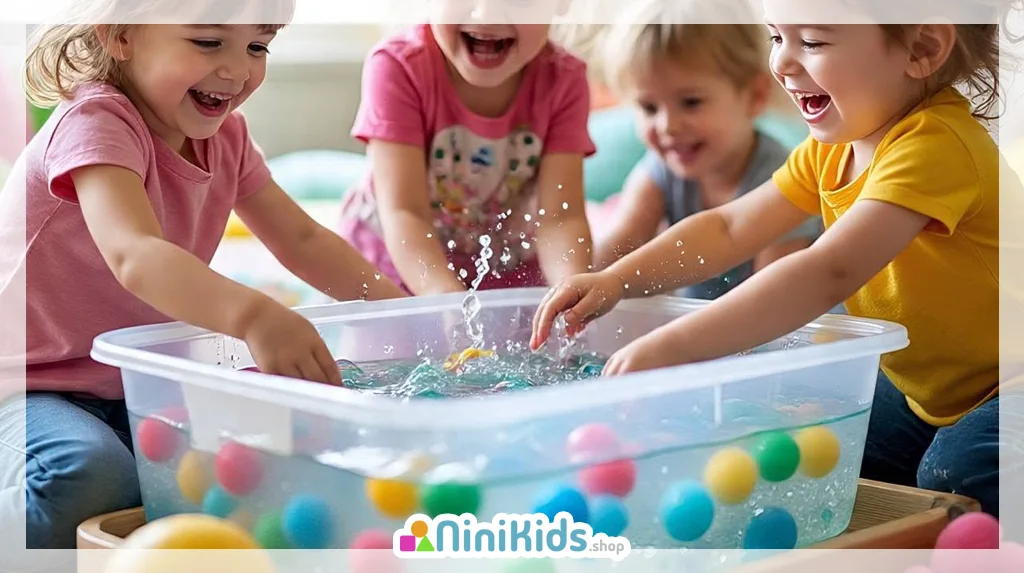
 Children naturally learn by exploring the world through their senses. Touching different textures, recognizing colors, solving simple puzzles, and experimenting with shapes all help build important thinking skills. Montessori sensory toys encourage hands-on discovery while supporting concentration, cognitive development, and problem-solving in a calm, engaging way. Our carefully selected collection helps children learn through meaningful play instead of passive entertainment.
Showing 1–16 of 31 results
 $33.33 Select options This product has multiple variants. The options may be chosen on the product page
- Price range: $22.00 through $25.00 Select options This product has multiple variants. The options may be chosen on the product page
- Price range: $83.00 through $96.00 Select options This product has multiple variants. The options may be chosen on the product page
- $42.00 Select options This product has multiple variants. The options may be chosen on the product page
- Price range: $17.00 through $17.50 Select options This product has multiple variants. The options may be chosen on the product page
- $19.00 Select options This product has multiple variants. The options may be chosen on the product page
- Price range: $12.00 through $20.00 Select options This product has multiple variants. The options may be chosen on the product page
 $18.00 Select options This product has multiple variants. The options may be chosen on the product page
- Price range: $18.00 through $25.00 Select options This product has multiple variants. The options may be chosen on the product page
- Price range: $14.00 through $15.00 Select options This product has multiple variants. The options may be chosen on the product page
- $12.00 Select options This product has multiple variants. The options may be chosen on the product page
- Original price was: $40.00.$29.00Current price is: $29.00. Select options This product has multiple variants. The options may be chosen on the product page
- Price range: $27.00 through $29.00 Select options This product has multiple variants. The options may be chosen on the product page
- $28.00 Select options This product has multiple variants. The options may be chosen on the product page







Showing 1–16 of 31 results
You've viewed 16 of 31 products
Explore Montessori sensory and thinking toys designed to enhance focus, problem-solving, and cognitive development.
Why Are Sensory & Thinking Skills Important?
Sensory experiences help children understand the world around them. As they explore different textures, sounds, colors, and shapes, they also develop memory, attention, reasoning, and problem-solving skills. Montessori-inspired toys encourage children to think independently while building confidence through exploration and repetition.
Skills Developed Through Sensory Play
Sensory activities stimulate multiple areas of development at the same time, helping children strengthen both physical coordination and cognitive abilities through everyday play.
- Sensory Exploration
- Problem Solving
- Concentration
- Memory
- Visual Perception
- Hand-Eye Coordination
Best Montessori Sensory & Thinking Toys
Simple, open-ended toys encourage children to observe, compare, sort, and explore at their own pace. These activities help build curiosity while supporting healthy brain development.
- Sensory Boards
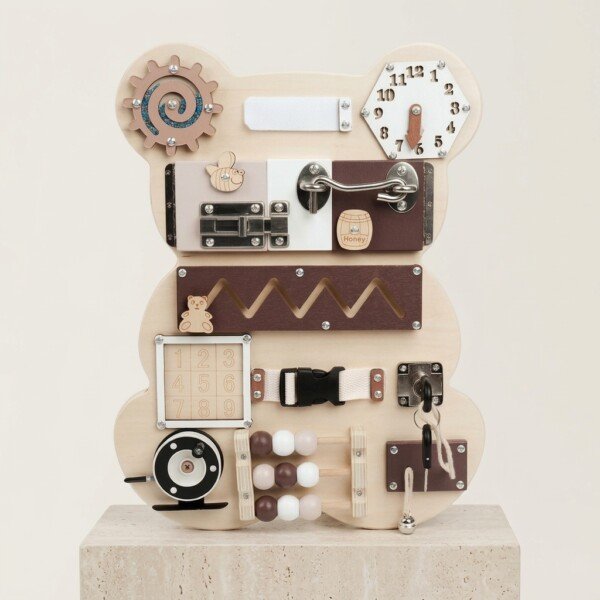
- Busy Boards
- Shape Sorters
- Texture Toys
- Wooden Puzzles
- Color Matching Toys
- Stacking Toys
Busy boards encourage children to explore everyday movements while strengthening concentration and fine motor control. Shape sorters help children recognize patterns, compare shapes, and develop early problem-solving skills. These simple activities create meaningful learning experiences that support both sensory exploration and independent thinking.
How Montessori Toys Support Cognitive Development
Montessori toys encourage children to think instead of simply reacting. Activities such as matching shapes, sorting colors, completing puzzles, and exploring different textures strengthen memory, reasoning, attention, and decision-making skills while making learning enjoyable.
Children who enjoy sorting and matching activities may also benefit from our Math & Counting Montessori Toys, where early numeracy develops naturally through hands-on learning.
Sensory Play at Different Ages
Children experience sensory learning differently as they grow. Choosing age-appropriate activities keeps play engaging while supporting healthy development at every stage.
- 0-1 Years: High-contrast visuals, rattles, sensory toys
- 1-2 Years: Shape sorters and texture exploration
- 2-3 Years: Color matching and simple puzzles
- 3-4 Years: Memory games and sorting activities
- 5+ Years: Logic puzzles and STEM challenges
Beyond Sensory Play
Sensory development is closely connected to language, creativity, and practical life skills. As children describe what they feel, compare objects, and solve everyday challenges, they strengthen communication and independent thinking.
Explore our Language & Literacy Montessori Toys to support vocabulary and communication through play.
Frequently Asked Questions
What are Montessori sensory toys?
Montessori sensory toys are hands-on learning materials designed to stimulate a child’s senses while encouraging exploration, concentration, and independent learning.
How do sensory toys support brain development?
Sensory play helps children build neural connections by encouraging them to explore textures, colors, sounds, and shapes while solving simple challenges.
Are sensory toys suitable for babies?
Yes. Babies benefit from safe sensory toys that encourage visual tracking, grasping, and tactile exploration using age-appropriate materials.
What is the difference between sensory play and cognitive play?
Sensory play focuses on exploring through the senses, while cognitive play encourages reasoning, memory, and problem-solving. Montessori toys often combine both.