
 Practical life is one of the core principles of Montessori education. Instead of learning through worksheets or screens, children develop confidence by practicing everyday tasks such as dressing, organizing, pouring, fastening, and caring for their surroundings. Montessori practical life toys encourage independence while strengthening concentration, coordination, and responsibility through meaningful, hands-on experiences.
Showing 1–16 of 21 results
 Price range: $83.00 through $96.00 Select options This product has multiple variants. The options may be chosen on the product page
- Price range: $17.00 through $17.50 Select options This product has multiple variants. The options may be chosen on the product page
- $19.00 Select options This product has multiple variants. The options may be chosen on the product page
 $18.00 Select options This product has multiple variants. The options may be chosen on the product page
- Price range: $18.00 through $25.00 Select options This product has multiple variants. The options may be chosen on the product page
- Price range: $14.00 through $15.00 Select options This product has multiple variants. The options may be chosen on the product page
- Price range: $27.00 through $29.00 Select options This product has multiple variants. The options may be chosen on the product page
- $70.00 Select options This product has multiple variants. The options may be chosen on the product page
- $55.30 Select options This product has multiple variants. The options may be chosen on the product page
- $46.57 Select options This product has multiple variants. The options may be chosen on the product page




Showing 1–16 of 21 results
You've viewed 16 of 21 products
Find Montessori practical life toys that teach independence, focus, and real-world skills through purposeful play.
Why Practical Life Skills Matter
Children naturally want to participate in everyday activities. Giving them safe, age-appropriate tools allows them to practice real-life skills while building confidence and independence. Simple tasks such as buttoning, pouring, or sorting objects also improve concentration, patience, and fine motor development.
Key Skills Developed Through Practical Life Activities
Practical life activities support much more than independence. They help children strengthen physical coordination, develop responsibility, and build confidence through repeated everyday experiences.
- Independence
- Self-Care Skills
- Fine Motor Skills
- Hand-Eye Coordination
- Concentration
- Responsibility
- Confidence
Best Montessori Practical Life Toys
Montessori practical life materials encourage children to participate in everyday routines while developing valuable life skills through purposeful play.
- Busy Boards
- Dressing Frames
- Lacing Toys
- Pouring & Transferring Sets
- Wooden Kitchen Toys
- Cleaning Play Sets
- Fine Motor Activity Boards
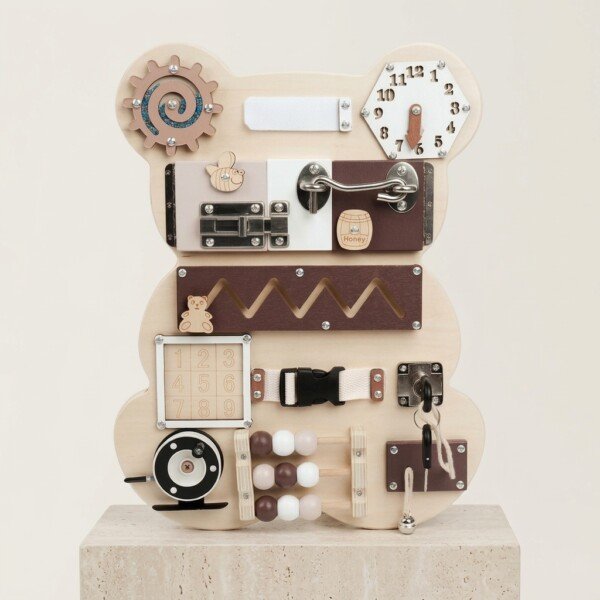
Busy boards allow children to practice everyday tasks such as fastening buckles, turning knobs, and opening zippers in a safe and engaging way. Dressing frames help children master practical self-care skills like buttoning and tying, while pouring and transferring activities improve coordination and independence through everyday routines.
How Practical Life Activities Support Child Development
Practical life activities strengthen much more than physical skills. As children complete everyday tasks independently, they develop patience, focus, problem-solving abilities, and self-confidence. Montessori encourages children to learn by doing, allowing them to gain meaningful experience through real-life situations rather than passive observation.
Many practical life activities also strengthen Motor Skills, especially fine motor control and hand-eye coordination.
Practical Life Learning by Age
Children become more independent as they grow. Choosing age-appropriate Montessori practical life toys helps them develop confidence while enjoying meaningful everyday experiences.
- 0-1 Years: Simple grasping and exploration
- 1-2 Years: Basic self-care and object transferring
- 2-3 Years: Pouring, sorting, and dressing practice
- 3-4 Years: Cleaning, organizing, and food preparation
- 5+ Years: More advanced daily responsibilities and problem-solving
Everyday Learning Beyond Practical Life
Practical life experiences naturally connect with language, math, and sensory learning. As children follow instructions, count objects, describe actions, and solve simple challenges, they strengthen communication, logical thinking, and cognitive development at the same time.
Explore our Language & Literacy Toys to encourage communication, or discover our Math & Counting Toys for hands-on early numeracy activities.
Frequently Asked Questions
What are Montessori practical life toys?
Montessori practical life toys are hands-on learning materials designed to help children practice everyday skills such as dressing, pouring, cleaning, organizing, and caring for themselves independently.
Why are practical life activities important?
Practical life activities help children develop independence, concentration, responsibility, confidence, and fine motor skills while preparing them for everyday tasks.
At what age can children begin practical life activities?
Simple practical life experiences can begin during infancy with age-appropriate exploration. As children grow, activities become more advanced and closely resemble everyday household tasks.
Do practical life toys improve concentration?
Yes. Montessori practical life activities encourage children to focus on one task at a time, repeat movements, and complete meaningful work independently, helping improve concentration over time.