
 Language is one of the most important foundations for lifelong learning. From learning first words to recognizing letters and beginning to read, children develop communication skills through meaningful everyday experiences. Montessori language and literacy toys encourage hands-on learning that helps children build vocabulary, improve listening skills, recognize letters, and develop confidence while learning at their own pace.
Showing all 3 results
- Original price was: $40.00.$29.00Current price is: $29.00. Select options This product has multiple variants. The options may be chosen on the product page
 $17.00 Select options This product has multiple variants. The options may be chosen on the product page

Showing all 3 results
Why Are Language & Literacy Skills Important?
Strong language skills help children express their thoughts, understand others, and build meaningful relationships. Early literacy activities introduce children to letters, sounds, and words in a natural way, creating a strong foundation for future reading and writing. Montessori toys encourage learning through exploration rather than memorization, making the process enjoyable and engaging.
Key Language Skills Children Develop
Children build language skills gradually through everyday conversations, storytelling, singing, and hands-on activities. Montessori-inspired toys make these learning experiences interactive and enjoyable.
- Vocabulary Development
- Letter Recognition
- Listening Skills
- Early Reading Readiness
- Communication Skills
- Phonics Awareness
Best Montessori Language & Literacy Toys
Hands-on learning materials encourage children to recognize letters, connect sounds with words, and build confidence through playful exploration.
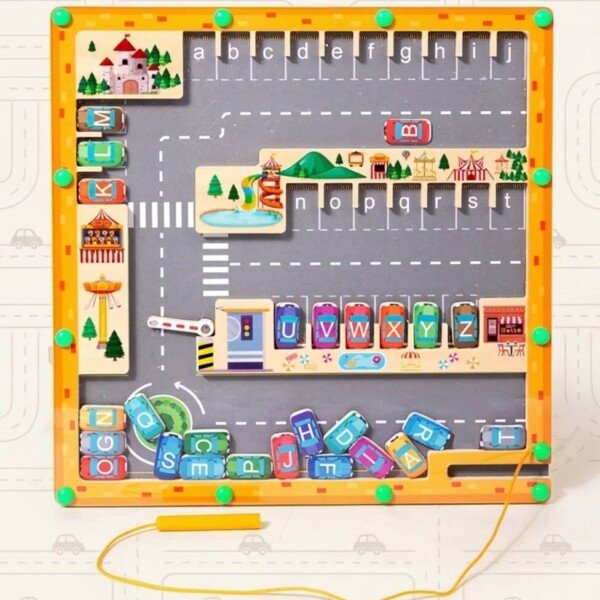
- Wooden Alphabet Puzzles
- Letter Matching Games
- Phonics Learning Toys
- Flash Cards
- Magnetic Letters
- Storytelling Cards
- Word Building Games
Alphabet puzzles help children recognize letters while strengthening fine motor skills. Letter matching games and phonics toys encourage children to connect sounds with symbols, making early reading feel natural and enjoyable. Storytelling activities also help expand vocabulary while encouraging imagination and communication.
How Montessori Toys Encourage Early Literacy
Montessori learning focuses on allowing children to discover language naturally through conversation, repetition, and hands-on activities. Rather than memorizing letters, children learn by touching, matching, sorting, and exploring. This approach builds confidence while encouraging curiosity and a lifelong love of reading.
Children developing early reading skills can also benefit from our Math & Counting Montessori Toys, where logical thinking and number recognition grow alongside language development.
Language Learning at Different Ages
Language develops rapidly during the first years of life. Choosing age-appropriate Montessori activities helps children strengthen communication skills while enjoying each stage of learning.
- 0-1 Years: Listening, sounds, picture recognition
- 1-2 Years: First words and vocabulary
- 2-3 Years: Letter awareness and storytelling
- 3-4 Years: Alphabet recognition and simple words
- 5+ Years: Early reading and word building
Learning Beyond Letters
Language development is closely connected to thinking, sensory exploration, and practical life experiences. As children describe objects, follow instructions, and solve everyday challenges, they naturally strengthen communication and comprehension.
Explore our Sensory & Thinking Skills Toys to encourage curiosity and cognitive development through hands-on exploration.
Frequently Asked Questions
What are Montessori language toys?
Montessori language toys are educational materials that help children build vocabulary, recognize letters, develop communication skills, and prepare for reading through hands-on learning.
At what age should children begin learning letters?
Children begin recognizing sounds and words from infancy. Letter recognition activities are often introduced gradually during the toddler and preschool years through playful, age-appropriate experiences.
Do Montessori toys help children learn to read?
Montessori toys support the skills needed for reading, including vocabulary, phonics awareness, letter recognition, and listening. They encourage learning through exploration rather than memorization.
What toys improve vocabulary?
Alphabet puzzles, storytelling cards, picture matching games, flash cards, and phonics toys all encourage children to expand their vocabulary while having fun.